













Are Party Tents Safe in Thunderstorms?
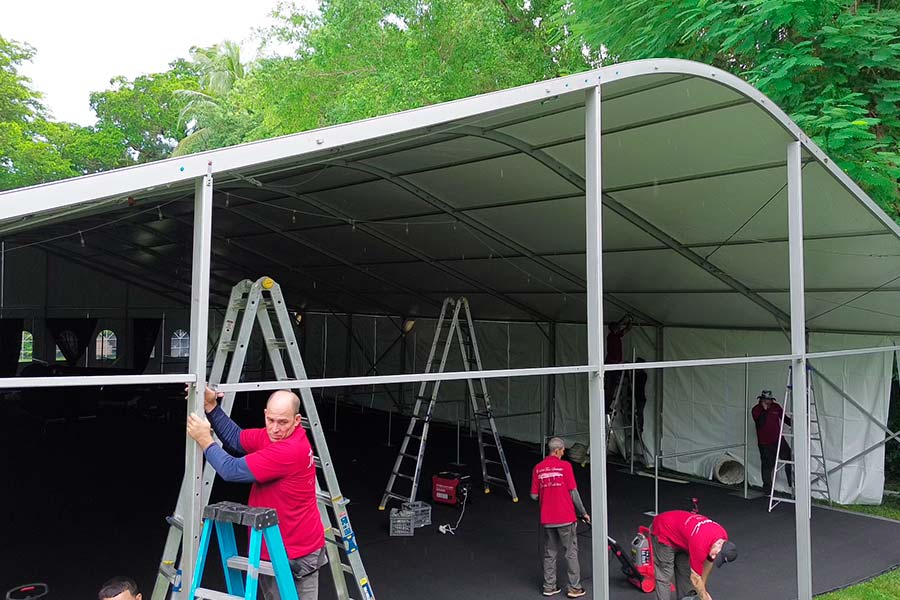
When planning an outdoor celebration, one question often appears: are party tents safe in thunderstorms? While party tents are built to handle moderate weather, they are not designed to protect guests from severe conditions such as lightning, heavy rain, or strong winds. Understanding their limits and taking proper precautions can help you make the right decision when bad weather threatens your event.
Let’s break down what happens during storms and how to manage them safely.
Understanding What Party Tents Can Withstand
Most high-quality party tents are made from durable materials like aluminum or steel frames and heavy-duty vinyl or PVC canopies. These materials can handle mild to moderate wind and rain. However, during thunderstorms, the situation changes.
Tents are not lightning-proof structures. Because metal frames conduct electricity, they can become dangerous if lightning strikes nearby. Even non-metal tents can collapse or leak under extreme conditions.
That’s why professional rental companies clearly state that tents should never be used as shelters during electrical storms. They can protect guests from drizzle or mild weather, but they are not a substitute for permanent buildings in severe conditions.
Knowing this helps set realistic expectations and prepare an emergency plan before your event begins.
Dangers of Staying Under a Tent During a Storm
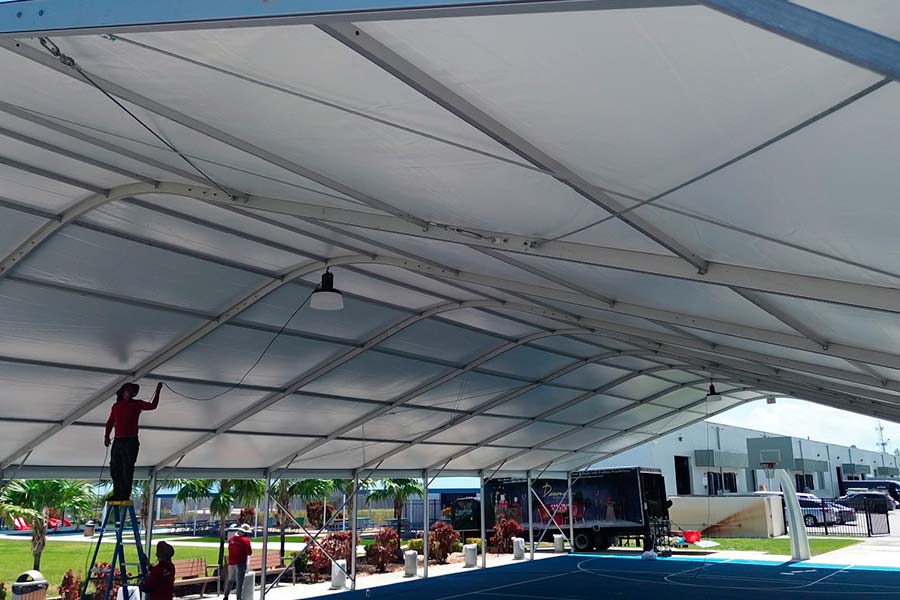
Staying under a party tent during a thunderstorm is unsafe for several reasons. The first is the risk of lightning. If lightning strikes the metal poles or nearby ground, the current can travel through the structure. Even tents with non-metal frames still conduct moisture and can attract electrical discharge.
Another risk is wind damage. High winds can lift or tear the canopy, send debris flying, or even tip over poles and anchors. Heavy rain can also collect on top of the canopy, causing it to sag or collapse if not properly tensioned.
When thunder is close and lightning is visible, the safest action is to move guests indoors or into vehicles. Having a clear evacuation plan ensures you can respond quickly before conditions worsen.
Once safety is your priority, it’s worth knowing what precautions you can take to minimize risks.
How to Prepare Your Tent for Unpredictable Weather?
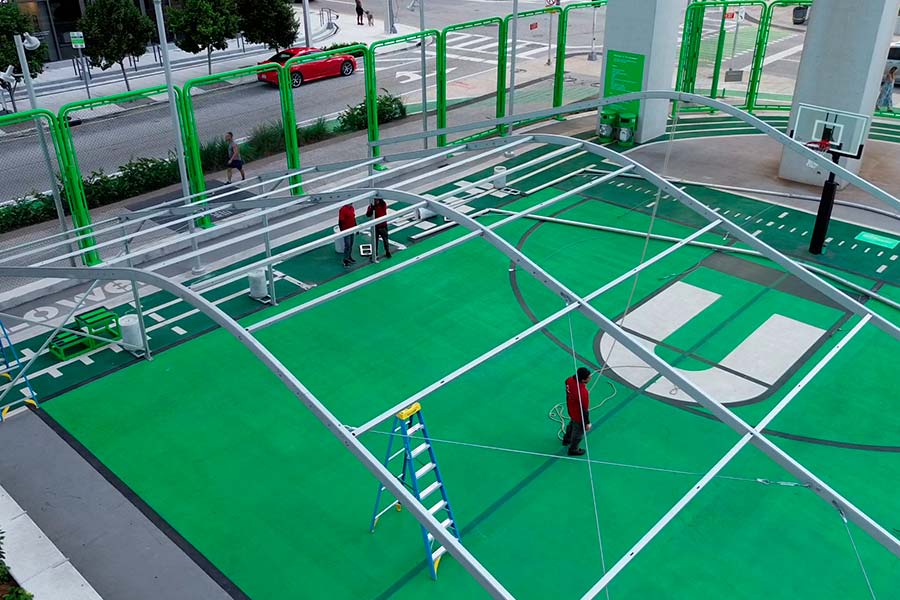
Preparation starts long before the event. Always check the forecast and have contingency plans in place. If there’s any chance of severe weather, inform your rental company so they can use reinforced anchoring and weighted ballasts instead of stakes when needed.
For mild rain or light wind, closing sidewalls can provide extra protection, but they should never be relied on in a thunderstorm. Make sure water can drain away from the tent area to avoid pooling or flooding underneath.
Choosing a flat, open area away from tall trees or power lines reduces the chance of lightning strikes and falling debris. Avoid setting up tents near metal fences, poles, or bodies of water.
These measures help keep your event running smoothly under light rain or wind, but during a true thunderstorm, the safest choice is always evacuation.
What to Do if a Thunderstorm Starts During an Event?
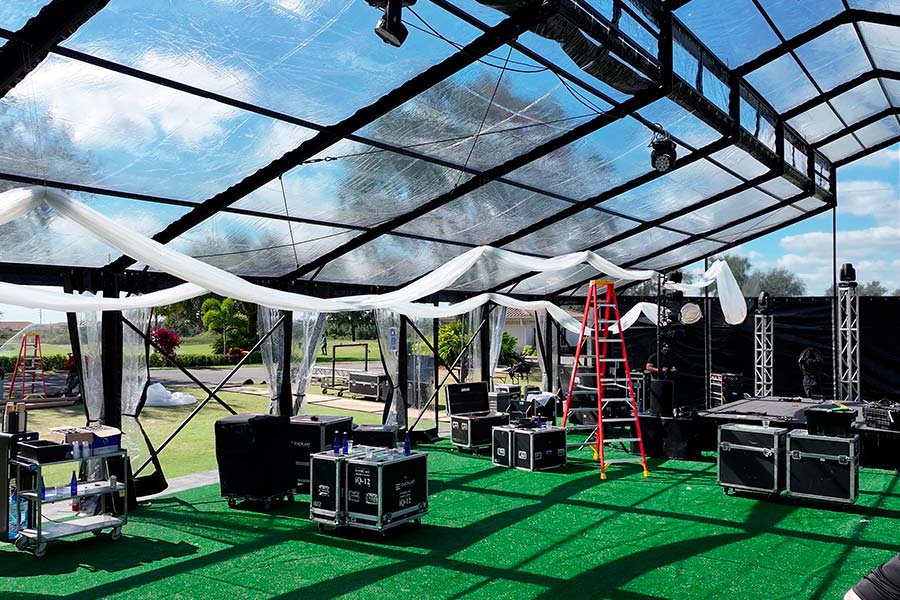
If a thunderstorm begins while guests are inside the tent, stay calm and act quickly. Use a pre-planned signal or announcement to guide everyone to safety. Move people to enclosed buildings or vehicles that are grounded and secure.
Avoid touching metal parts of the tent, and never try to hold poles or fabric to prevent movement. Once everyone is safe, wait at least 30 minutes after the last thunder sound before resuming the event. This safety window ensures the storm has passed and the risk of lightning has decreased.
Having trained staff or event coordinators who know how to execute an evacuation plan can make a huge difference. If your event is managed by a professional rental company like Imperial Event Rentals, their team can guide you through these steps efficiently and safely.
After the storm, it’s important to inspect the tent before using it again.
Inspecting the Tent After a Storm
Once the weather clears, check for signs of damage. Look for loose anchors, torn fabric, or bent frame parts. Wet surfaces should be dried as soon as possible to prevent mildew and ensure the tent is ready for use again.
If water has pooled inside or near electrical equipment, wait for professionals to inspect the area before reconnecting any power sources. Rental companies can determine whether the tent can be safely reinstalled or if replacement parts are required.
Even if the structure appears fine, always prioritize safety over convenience. Proper inspection prevents accidents and protects both guests and equipment.
Finally, let’s look at how to reduce storm risks before they ever become a problem.
Preventing Weather-Related Issues for Future Events
The best way to deal with bad weather is through prevention. Choose sturdy frame tents made with certified materials that meet safety standards. These structures handle wind and rain better than lightweight models. You can learn more about the materials that make them reliable in our article What Are Party Tents Made Of.
When selecting your date, consider seasonal weather patterns in your area. Hosting during months with lower storm frequency greatly reduces risk. For winter events, heating and insulation become priorities; for rainy seasons, water drainage and stability matter most.
All these measures help ensure your outdoor celebration stays comfortable and secure.
If you want to explore how different tents perform across seasons, read our main guide on party tents for a full overview of options and best practices.
Final Thoughts
Party tents are perfect for mild weather but should never be relied on during thunderstorms. Lightning, wind, and heavy rain can turn a festive space into a safety hazard in minutes. Preparing ahead, monitoring weather forecasts, and having an evacuation plan are essential steps for any outdoor event.
The safest approach is simple: when in doubt, move your guests indoors and wait until conditions improve. With professional guidance and careful planning, you can enjoy your celebration confidently while keeping everyone safe, no matter what the forecast brings.